Interior Painting in Temecula, CA

Notes on interior painting in Temecula, CA: matching wall texture after patches, tall ceilings, cabinets and choosing the right sheen for each room.
What We Cover
- Choosing Eggshell, Satin or Semi-Gloss Room by Room in Temecula How eggshell, satin and semi-gloss behave in bedrooms, baths and hallways, and how dry inland light changes the look.
- Covering Flat Builder Paint in Newer Temecula Tract Homes Why the flat paint a builder sprays on new walls marks easily and how a repaint with a washable sheen handles it.
- Hot Dry Weather and Interior Paint Timing in Temecula How hot, dry inland days and open windows affect drying time, lap marks and when to schedule interior painting.
- Matching Orange Peel Texture After a Drywall Patch in Temecula How a patched wall in a newer Temecula tract home gets its orange peel texture matched so the repair disappears under paint.
- Painting Kitchen Cabinets in a Temecula Tract Home The steps in cabinet painting for a builder-grade kitchen, from degreasing and sanding to bonding primer and curing.
- Painting Tall Ceilings and Stairwells in Temecula Homes What changes when a Temecula home has a two-story entry or stairwell, from scaffolding setup to ceiling paint choice.
Interior Painting in Temecula, CA
Most interior painting in Temecula, CA happens inside homes built in the last few decades, with sprayed orange peel on the walls, flat builder paint over it and tall ceilings in the entry. The work starts with the surface. A crew reads the texture, the sheen and the light in each room before opening a can, because a wall in the Temecula Valley gets sun from wide windows for most of the day and shows every shortcut.
Patches and texture
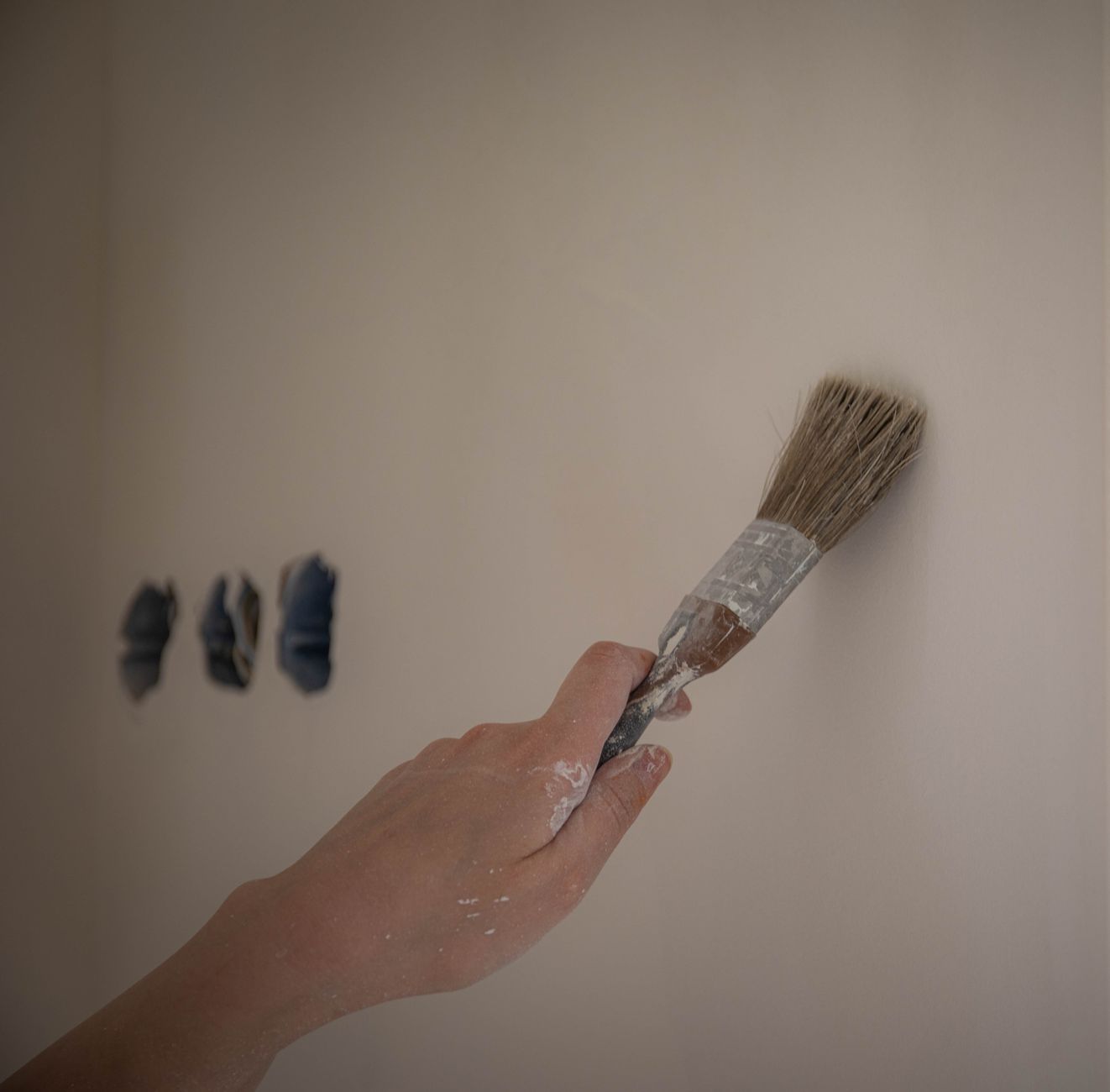
Drywall repairs are common in newer tract homes, from plumbing access cuts to settling cracks. A patch has to be built in thin passes, sanded, textured to match the orange peel or knockdown around it, then primed. Painting over a smooth patch leaves a shiny rectangle that raking light finds immediately.
Ceilings, stairwells and trim
Two-story entries need planks and ladders set across the stairs before any paint goes on. Ceilings take flat latex rolled in two coats, and trim takes a harder enamel in semi gloss, cut in with a steady brush. Warm, dry air near the top of a stairwell dries the coat quickly, so crews work in short sections and keep a wet edge.
Cabinets and sheen
Builder kitchens usually carry the same stock cabinets, and cabinet painting means degreasing, sanding, bonding primer and a trim enamel that is left to cure with the doors off. Wall sheen changes room by room: eggshell for bedrooms, satin for hallways and kitchens, flat for ceilings. Low-VOC paint comes in all of them, which helps when a family stays in the house.
Around the valley
Homes near Temecula Creek, Murrieta Creek and the edge of the wine country share building habits that repeat house after house in Riverside County. The dry Inland Empire climate shapes the schedule more than most people expect, with early starts in summer and slower drying on cool winter mornings.
Guides
The pages here cover matching texture after a patch, painting tall ceilings and stairwells, recoating flat builder paint, painting kitchen cabinets, choosing sheen room by room and timing paint in hot, dry weather. Each one sticks to the mechanics of the work as it happens in Temecula homes.
Latest Guides
Choosing Wall Color in the Bright Light of Temecula Homes
2026-10-06
Why does wall color look different in Temecula than it did in the store?
A paint chip under store lights tells you very little about a wall in a Temecula home. The valley sits inland, the sun is high and hard for much of the year, and newer tract homes were built with tall, wide windows that pour that light into the living room and stairwell. A beige that looked warm on a card can turn yellow at four in the afternoon and gray at eight in the morning. Painters who work in Temecula, CA learn to treat light as the first ingredient of any color decision, before the name on the can matters at all.
Two things change a color on the wall: the light that hits it and the colors around it. The light changes by direction and time of day. The surroundings include the floor, the cabinets, the countertops, the trim and even the view through the window. A room that looks out on the green slopes of the Temecula Valley wine country picks up a little reflected green. A room facing a stucco neighbor's wall picks up warm cream. None of that shows on a two inch chip.
How does each direction of window change the same paint?
The table below shows the general pattern. It is a rule of thumb from the trade, and a sample on the actual wall always overrules it.
Room faces What the light does What it does to paint North Steady, cool, indirect light all day Pulls colors toward blue and gray, so warm tones hold up better East Bright and warm in the morning, flat by noon Colors look lively early and quieter later South Strong light for most of the day Warms and brightens colors, and can wash out pale ones West Dim in the morning, hot and orange in late afternoon Pushes colors toward yellow and red in the evening West rooms in Temecula are the ones that surprise people. The late sun comes in low across the Inland Empire and turns a neutral gray into something that looks faintly pink. A paint with a green or blue undertone behaves better in that light than one with a red undertone, because the orange sun adds the warmth for free.
What is an undertone and why does it matter?
Every neutral has a hidden color in it. A white can lean yellow, blue, pink or green. A gray can lean purple or brown. The undertone is what you notice when the paint sits next to something else, such as a white trim, a granite counter or a wood floor. Many newer Temecula homes have honey oak or tan carpet that leans yellow, and a cool gray wall beside it can look harsh. A greige with a touch of warmth usually sits better.
The easiest way to see an undertone is to hold the chip against a sheet of plain white copy paper. The chip's tint becomes obvious against the paper, and a painter can tell in seconds whether it leans green, pink or something else. Comparing three or four neutrals this way narrows the field faster than staring at a fan deck.
How should a sample go on the wall?
A sample works only when it is large and given time. A patch the size of a sheet of poster board, painted in two coats, tells the truth. A small brushstroke does not, because the old wall color shows around it and tricks the eye. Some crews roll the sample onto a board that can move from wall to wall, which shows the same color against the east wall in the morning and the west wall at dusk.
Leave the sample up for at least a full day. Look at it in the morning, at midday, in the evening with the lamps on, and once more on a cloudy day if the weather allows. The color will change at each of those times. If it still looks right at all of them, the decision is safe. If it fails at one, you know exactly when and why before the whole room is painted.
How does sheen change the way color reads?
Sheen and color are not separate decisions. A flat finish soaks up light and looks deeper and softer. An eggshell throws back a little more light and looks slightly lighter. Satin and semi gloss reflect even more and can look a shade brighter, with highlights that show where the light hits. The same can of paint in flat and in satin can look like two different colors side by side.
In a Temecula living room with a big west window, a higher sheen on the wall shows the glare strip at sunset and every lap mark in the roller pattern. Eggshell is the common answer for that reason. In a hallway that sees backpacks and hands, satin earns its extra shine because the film wipes clean. Trim and doors take semi gloss, and a white trim enamel against an eggshell wall is the most common pairing in tract homes.
What about orange peel texture and color?
Texture catches light and throws tiny shadows, and those shadows deepen the color. A smooth wall and an orange peel wall painted the same color do not look identical. The textured one looks a touch darker, especially under raking light from a tall window. This is another reason a sample should be painted on a textured section of wall and not on a smooth board, if the board is the only thing you are going to judge it by.
Knockdown texture, which is orange peel with the peaks flattened, reads somewhere between the two. It picks up fewer shadows than a full orange peel but more than a smooth wall. Crews who match texture after a drywall repair often compare it under a work light held low against the wall, which reproduces the effect of the late afternoon sun.
How do you choose between two colors that both look fine?
When two samples both work, the tiebreaker is usually the neighbors. Look at what sits beside the room: a hallway, a stairwell, an open kitchen. In many newer Temecula floor plans, the living room, kitchen and stairwell are one visible space, so a color that looks good in one corner has to look good from every angle. Painting each room a different strong color in an open plan tends to look busy, and most homeowners end up choosing one main wall color with a second lighter or darker tone for accent walls and trim.
Ceilings deserve the same thought. A pure white ceiling next to a warm wall can look cold. A ceiling paint tinted a quarter toward the wall color often reads softer, especially in a tall stairwell where the ceiling is a large visible surface. Flat ceiling paint hides roller marks, so it is the usual choice even when the walls are eggshell.
What mistakes come up most often with color?
- Choosing from a tiny chip without a large sample on the real wall.
- Judging color at night under warm lamps and forgetting about the day.
- Ignoring the floor, counters and cabinets, which carry the strongest undertones in the room.
- Picking a glossy sheen for walls with orange peel, which exaggerates every bump.
- Painting one wall of an open plan a color that fights the adjoining rooms.
- Skipping primer over a dark wall or a patched area, which makes the new color look uneven.
Why does primer affect the final color?
Paint is slightly translucent, especially lighter colors. A dark wall painted a pale color without primer needs several coats and can still show a ghost of the old shade. Patched sections of drywall absorb paint differently from the surrounding wall, and the repaired spot can look duller or darker even after two coats. A coat of primer evens out those differences so the topcoat has a uniform base. On builder flat paint that has been sprayed thinly, primer also prevents the first coat from sinking in unevenly.
What is the quiet way to finish the decision?
Pick the sheen for the room first, then judge two or three colors in that sheen on a large sample, in the real light, for a full day. A color chosen that way rarely disappoints once it covers the whole room.
Living in a Temecula House During Interior Painting: Common Questions
2026-10-06
Can a family stay in the house while the interior is painted?
In most Temecula tract homes the answer is yes, and plenty of families do it. The work moves room by room, doors stay open between finished and unfinished areas, and the kitchen and at least one bathroom stay usable most of the time. What changes is the daily rhythm: furniture shifts to the middle of rooms, floors get covered, and certain areas close for a day while paint cures. A crew that plans the order of rooms around how the household lives makes the whole job easier on everyone.
Open floor plans complicate things a little. In many newer Temecula homes the living room, kitchen, dining area and stairwell share one big space, so painting any part of it affects all of it. Painters often split the job by sight lines instead of by room names, finishing the whole entry and stairwell in one pass and then moving to the bedrooms upstairs.
What does the house smell like during and after the work?
Modern latex and acrylic paint is mostly water, and the smell is mild compared with the oil based paint of a few decades ago. Low-VOC paint, which has fewer volatile compounds, has even less odor, and it is the usual pick when children, pets or sensitive noses are in the house. A fresh coat still smells like paint for a day or so, and the smell fades faster with airflow.
Primers and enamels can smell stronger than wall paint. Stain-blocking primer on a water stain, or an oil based enamel on a cabinet, are the two places where the smell is most noticeable. Crews who use them usually schedule that work early in the day, open windows in the room being worked on, and run a fan pointed outward to pull the air through. The dry air of the Inland Empire helps, because it carries odor out of a room quickly when the windows are open.
How long before a room is usable again?
A painted room is dry to the touch within an hour or two, but it is not fully cured. Latex paint keeps hardening for days. The film is soft for the first week or so, which means a wall that is scrubbed hard or pressed with furniture in the first few days can mark or peel. Semi gloss on trim and enamel on cabinets cure more slowly than flat wall paint, because the harder film needs longer to harden all the way through.
The practical rule is to sleep in a painted bedroom the same night if the windows can be open, but to keep furniture a few inches off the wall and avoid taping anything to the fresh coat for several days. Doors that were painted should be held open until the edges are no longer tacky. A door closed on wet enamel can stick to its frame, and pulling it free takes the paint with it.
What happens to the furniture and floors?
Furniture gets moved to the center of the room and covered with plastic or cloth. Floors get canvas drop cloths, which are better than plastic sheeting because plastic is slippery and does not absorb drips. Stairs are the hardest area, because a drop cloth has to be taped or held down on every tread, and a crew often paints the stairwell walls before covering the steps so that the heavy cloth is laid only once.
Wall hangings, curtain rods and light fixtures come down or get covered. Outlet and switch plates are removed and returned. A good prep leaves each room looking like a construction site for a day and a finished room by the end of it. Homeowners who clear the small items out of the way beforehand save the crew time and lower the chance of a breakage.
What do pets and children need around wet paint?
Wet paint is not a poison risk in the way a solvent is, but animals and small children should not lick walls or chew on trim, and they should stay out of the room until the surface is dry. A baby gate across a doorway does the job in a pinch. Cats are known for walking across a drop cloth and then across a floor, and a wet paw print on a hardwood floor in a newer Temecula home is easier to wipe up in the first minute than the next day.
Keeping dogs in the yard or a spare room during the sanding stage is also sensible. Sanding raises fine dust, and a crew that uses a sander with a vacuum attached keeps most of it out of the air, but the dust still settles on surfaces. Wiping down the walls and floors after sanding and before painting is part of normal prep.
Is drywall dust a problem?
Dust is the part of the job people notice most, and it comes from patching and sanding, not from the paint itself. Spackle and joint compound sand into a fine white powder. Crews contain it with plastic sheeting over doorways, a vacuum sander, and a final wipe with a damp cloth. Furniture that cannot be moved out of a room should be covered, because fine dust finds its way under loose cloth.
Running the air handler during sanding pulls dust into the ducts, so many crews switch the system off in the work area and cover the return vents with plastic until the sanding is finished. They turn it back on after the cleanup and a final vacuum.
Does the paint need to be tested on a small area first?
Yes, and the test goes on the real wall. A swatch tells you how a color looks, and it also reveals whether the primer is covering a stain, whether the new coat sticks to the old finish and whether the sheen reads well in that room's light. A small test patch on a closet wall or an inconspicuous corner answers those questions in an afternoon. A patch left to dry overnight shows its true color and its adhesion.
What about touch-ups later?
Keep a small amount of each color, labeled with the room and the sheen. A touch-up works best soon after the job, because paint ages and the color of a fresh dab on a year-old wall can look slightly off. On a textured wall, a touch-up is best done with a small roller that matches the texture, and not a brush, because a brush leaves a smooth spot that shines in raking light.
Scuffs on flat builder paint do not wipe off, and a touch-up there usually needs a light primer spot first. On eggshell and satin, many marks wipe off with a damp cloth once the film has cured, which is one reason those sheens are used in hallways and kids' rooms.
Do hot days or open windows affect the work?
They do. In the heat of a Temecula Valley summer, paint dries faster, which makes lap marks more likely, and a breeze through open windows can dry one wall before the next is rolled. Crews adjust by working shorter sections, closing windows near the wall being painted, and starting early in the day. In cooler months near Murrieta Creek or the Santa Margarita River, mornings can be damp and cool enough to slow drying, and paint on a cold wall stays tacky longer. Both extremes are manageable once the crew knows to expect them.
How can a household prepare so the job goes smoothly?
- Clear shelves, counters and the floor within a few feet of every wall.
- Take down pictures, mirrors and curtain rods, and move fragile items to another room.
- Decide on colors and sheens before the first day, with samples already tested on the walls.
- Plan where pets and children will spend the day.
- Point out any patched spots, stains or old repairs so they get the right primer.
- Keep one room completely closed off for sleeping or working, with the door shut and a fan running.
What is the short version for a household?
Plan the order of rooms, keep air moving, and give each coat time to dry before anything touches it. A house can stay lived in and still come out of the job with clean, even walls.